
6 min read · Updated November 2026
How to prepare a machine before the riggers arrive
Before the crew arrives, lock out the machine, have utilities disconnected, drain or secure fluids, tie down or remove loose parts, and photograph and label everything that will be taken apart. Clear the path and the work area so the riggers can start on the lift, not the housekeeping.
- Nevada Contractors License 46276
- USDOT 642556 · our own trucks
- 4.6 on Google (15 reviews)
Key points
- Lock out and disconnect before any rigging begins
- Drain or secure fluids according to the manual, and keep the paperwork
- Remove or tie down moving parts, tool changers, doors and cables
- Photograph and label every connection before it comes apart
- Clear a path from the machine to the door and mark any floor hazards
Good preparation is the least costly way to protect a machine. Most damage in a move comes from things that were loose, unlabeled or still connected, not from the lift itself. The checklist below splits the work into what the plant normally handles and what the rigging crew handles, so nothing falls between the two.
Step one: energy and utilities
The machine must be de-energized and locked out under the plant's own program before anyone disconnects or lifts it. The next guide, lockout/tagout before a machinery move, explains the rule. After lockout, qualified people disconnect electrical, compressed air, water, gas and control wiring. Electrical, plumbing and gas work is done by the properly licensed trade, and who does each disconnect and reconnect is agreed in the estimate.
Step two: fluids and stored energy
Hydraulic oil, coolant, lubricants, compressed gas and accumulators can all shift, spill or release without warning. Follow the manufacturer's manual for what to drain and what to leave. Some machines travel with oil in a sealed reservoir, and others must be drained to avoid leaks and extra weight. Cap and label open lines. Bleed pressure from hydraulic and pneumatic circuits, and secure springs and counterweights. Any fluids removed are the plant's responsibility to store or dispose of properly.
Step three: loose parts and attachments
Anything that can swing, slide or fall during a lift needs to be locked, strapped or removed. That includes doors, guards, tool changers, spindles, tables, chip conveyors, pendant controls and cables. Put small parts and fasteners in labeled bags and keep them with the machine. If the manual lists a shipping position or shipping bolts for transit, use them.
- Lock tables, carriages and slides in the shipping position
- Remove or secure tooling, fixtures and workpieces
- Tape or strap doors and covers closed
- Coil and label cables, and cap their connectors
- Take off anything that extends beyond the machine's body
Step four: document before you disassemble
Take photos of the machine from every side, close-ups of each connection, and the serial plate. Tag wires and hoses so they go back where they came from. Photograph the floor anchors and any shims. A short written list of what was disconnected and by whom is useful when the machine is reconnected. Pictures also help the estimator and the crew plan. See how to measure a machine for what else to capture.
Step five: anchors, floor and path
Find out how the machine is held down: anchor bolts, grout, epoxy, leveling pads or nothing at all. The rigging crew needs to know before lifting. Check the floor along the route for trenches, drains and patched slabs, and clear the path of pallets, carts and other equipment. Tell people nearby when the lift will happen so that the work zone can be kept clear. Powered industrial trucks must be operated by trained operators under OSHA 1910.178, a point to remember if your own forklifts will help.
What the riggers bring
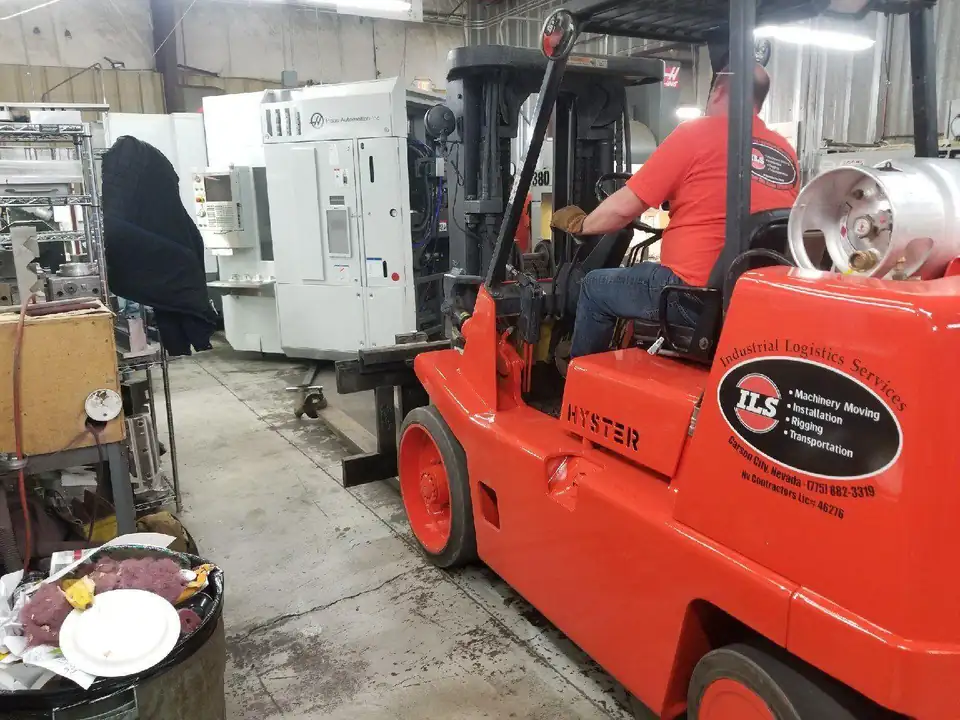
Once the machine is ready, the rigging crew brings the lifting equipment, slings, hardware and protective gear. ILS publishes forklifts from 3,000 lbs. to 100,000 lbs. with rigging booms, a 2-ton portable aluminum gantry and a 300-ton hydraulic gantry system, and it chooses between them for each machine. How the plan is built is in lift planning basics. When you are ready, ask for a free estimate with your photos and notes attached.
Sources (3)
- U.S. Occupational Safety and Health Administration: osha.gov/laws-regs/regulations/standardnumber/1910/1910.147 (checked November 2026)
- U.S. Occupational Safety and Health Administration: osha.gov/laws-regs/regulations/standardnumber/1910/1910.178 (checked November 2026)
- ASME: asme.org/codes-standards/find-codes-standards/b30-9-slings (checked November 2026)
Send the machine details
Type, size, weight, where it is and where it is going. Photos help. Estimates are free.
Start the estimateLicensed in Nevada
Nevada State Contractors Board licenses 0046276 (C-33 Installing Industrial Machinery), 0083124 (A-14, A-20) and 0083125 (C-14I Rigging and Cranes, C-14J Conveyance of Goods). USDOT 642556, MC-531191.
What the classes coverDo I have to drain all the fluids?
Not always. The manual for your machine says what to drain and what can travel full. Fluids add weight and can leak, so the estimator needs to know which choice applies.
Who disconnects the electrical and plumbing?
Licensed trades, as agreed in the estimate. ILS coordinates the timing so the machine is ready when the crew arrives.
Should I take the machine apart myself?
Only what the manual and your technicians say is safe to take apart. Ask ILS first if you are unsure whether a section should be removed or moved whole.
Free estimates
Tell us what needs moving.
Free estimates on every job, big or small. Call the office or send the machine details and we will call you back.
(775) 882-3319Monday to Friday, 7:00 am to 4:00 pm. Fax (775) 882-2693.
- Nevada Contractors License 46276
- USDOT 642556 · our own trucks
- Carson City since 1999
- 4.6 on Google (15 reviews)